But…Truckee Needs Housing!
We often hear two statements:
“Local workers cannot find affordable housing in Truckee.”
That is a true statement.
“We have a shortage of housing in Truckee.”
That statement is only partially true.
The accepted rough estimate is that housing in Truckee is occupied only about 50% of the time. And therein lies the problem. It’s a sticky wicket—not just in Truckee, but in just about any community in the United States that has become a popular tourism destination.
KEY CONSIDERATIONS
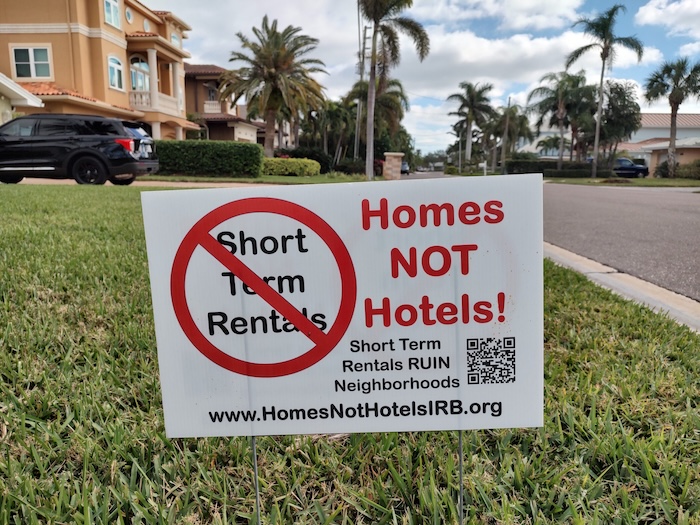
Short-term rentals continue to create challenges for many communities. Homes that were once long-term rentals have increasingly become hotels scattered throughout vacation areas, including Truckee. That reduces the supply of housing available to local workers and generally puts upward pressure on rents.
There was a time when you really had to plan a trip to Tahoe. Campgrounds, hotels, and motels would fill up, and if you couldn’t find a place to stay, you simply tried again another time. Short-term rentals have changed that equation. As a result, trails, beaches, and local events can become overcrowded. Today, it is much easier to find a place to stay.
STR supporters often point out that there are only about 1,800 approved STR permits in Truckee. What is less clear is how many additional “pirate STRs” may be operating without permits. If the actual number is substantially higher, that represents a significant amount of housing that is either unavailable to long-term renters or not available to potential buyers.
A growing number of communities in California, across the United States, and around the world have chosen to place significant restrictions on short-term rentals. Those policies can have economic impacts, but communities have also reported benefits from returning some housing to the long-term market.
Truckee should consider gradually reducing its dependence on the transient occupancy tax revenue generated by short-term rentals and taking another look at how many STRs the community can reasonably support.
Unoccupied second homes are another part of the equation.
In some parts of Truckee, estimates suggest that as many as 80% of homes may be unoccupied at a given time. At the same time, we know what the community looks like when many of those homes are occupied. We see it during the week surrounding the Fourth of July and again between Christmas and New Year’s: traffic backs up, parking becomes difficult, restaurants and stores are crowded, and local businesses struggle to keep up with demand.
Clearly, 100% occupancy isn’t necessarily the answer either.
The frustrating part is that vacant homes still require public services. Fire protection, police protection, road maintenance, snow removal, and utility infrastructure all have to be provided whether a home is occupied every day or only a few weeks a year. All of us contribute to the infrastructure that supports those homes.
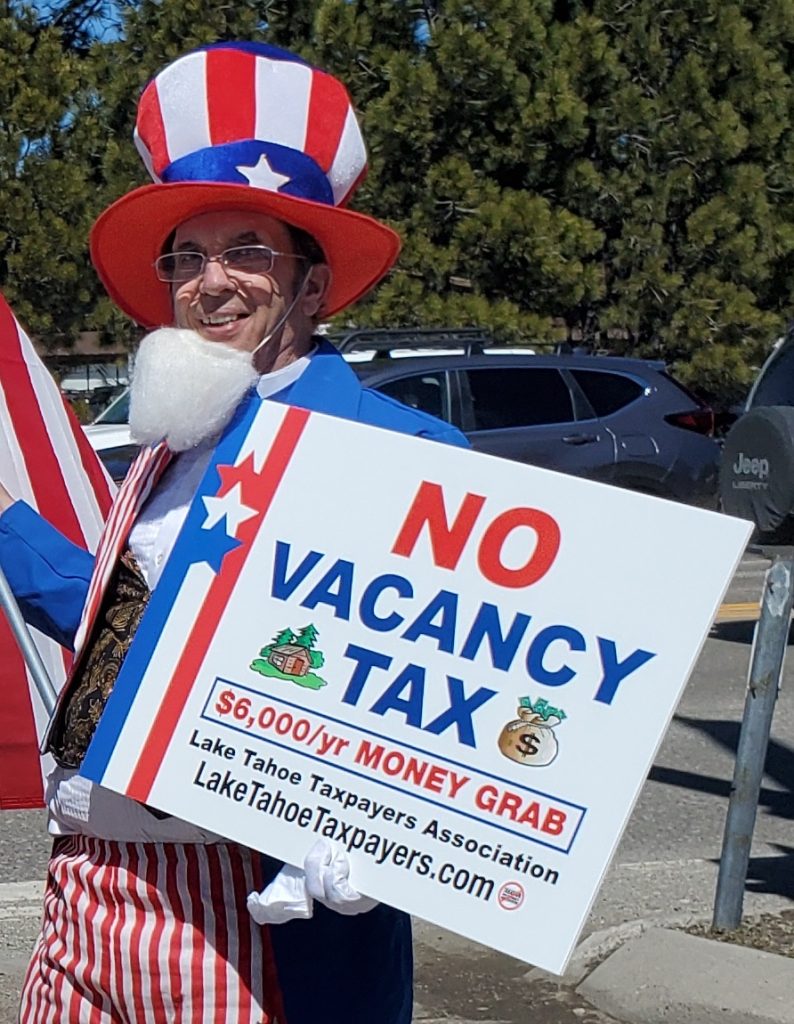
South Lake Tahoe’s proposal for a vacancy tax failed after significant opposition and substantial spending on the campaign against it.
But what if a portion of those homes could instead be encouraged into the long-term rental market?
Several communities have implemented vacancy taxes on homes that remain unoccupied for a certain percentage of the year. The threshold varies depending on the circumstances and severity of the problem in each community. These taxes are understandably unpopular with people who own a second home and want to keep it available for their own vacations.
There may be room for compromise. Some communities have considered applying such taxes primarily to people who own three, four, or five vacation homes. Another consideration is corporations that own multiple vacation properties.
The larger point is simple: a community should at least be willing to explore ways of putting some otherwise empty homes back into productive use.
Truckee should consider whether a carefully designed vacancy-tax program could increase the availability of existing housing stock while minimizing unintended consequences.
Remote work has also changed the equation.
Before high-speed internet became commonplace, working remotely was limited mostly to a relatively small number of occupations. Before remote work became widespread, we had a housing supply that was largely designed around the people who actually worked in Truckee—firefighters, teachers, construction workers, nurses, and other local employees.
No one anticipated that our housing market would eventually need to accommodate large numbers of people who could live here while working for companies located somewhere else.
That is a significant change in the housing equation, and it is one more reason why simply building more homes may not solve the entire problem.
BUILDING HOUSING STOCK
It would be fantastic if the Truckee Donner Land Trust, or another willing benefactor, were able to acquire the development rights to the Brockway Collective property. This area deserves serious consideration as one of the few remaining wetlands on this end of Truckee.
Protecting the wild spaces used by local wildlife and birds is a worthwhile goal. And how cool would it be to improve the existing dirt trails from the ends of Columbine Road and Shorepine Road? Dozens of kids and adults use those trails every day.
But realistically, new homes are going to be built somewhere.
What if the Brockway Collective had proposed a dozen new single-family homes on the six buildable acres instead of 115 units? It would still represent development, and it would certainly not be a perfect solution. But it might also have produced a very different conversation within Sierra Meadows.
Sustainable, measured growth should be a goal we can all support.
People are quick to point out the limited availability of vacant lots in most areas of Truckee. But there is another possibility that many people don’t know much about: Accessory Dwelling Units (ADUs).
California began passing a series of laws around 2020 intended to make ADU construction easier throughout the state. Many of these laws streamlined approvals and reduced fees associated with building secondary units. More recently, state laws have created additional opportunities for ADUs to become separately saleable properties under certain circumstances.
The appeal of ADUs is that they allow communities to add housing incrementally, rather than relying exclusively on large developments. That can provide a more manageable pace of growth while giving communities time to expand infrastructure as needed.
Truckee already has programs intended to encourage ADU construction. There is an opportunity to do more.
“DENSITY BONUSES” ARE A REAL CHALLENGE IN RURAL AREAS
California is facing a housing shortage on a much larger scale. The problem isn’t limited to tourism. California is also a highly desirable place to live and has one of the largest economies in the world. Housing demand has consistently outpaced the ability to build new homes in many parts of the state.
One response has been California’s Density Bonus Law. In general, developers who include a specified percentage of units that meet certain affordable-housing criteria can receive additional development rights.
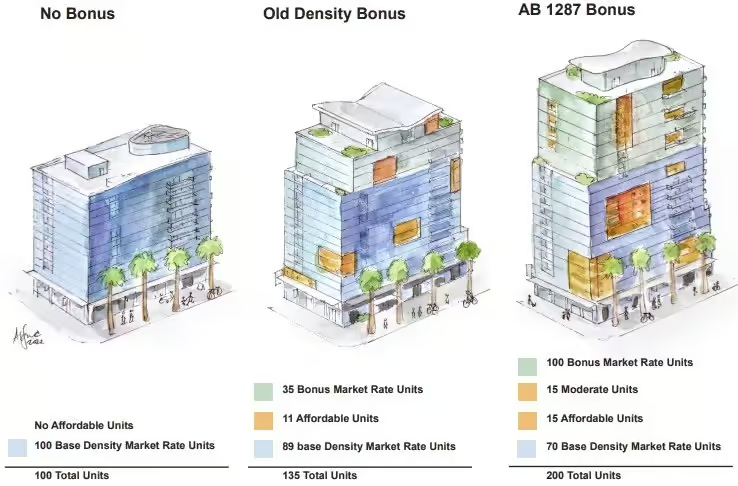
Those bonuses can take several forms. At its simplest, a density bonus can allow a developer to build more units than existing local zoning would otherwise permit. Depending on the project and applicable law, density-bonus provisions can also interact with other local development standards and environmental review requirements.
In the case of the Brockway Collective, the developer is proposing 17 affordable units in exchange for a number of development concessions. Under California law, it can be very difficult for a local community to simply say, “No.”
Density bonuses may make more sense in communities with large amounts of relatively flat, developable land and the ability to expand infrastructure—places where additional roads, fire stations, schools, and grocery stores can be built as the population grows.
Truckee presents a very different set of challenges.
We have limited developable land, difficult terrain, environmental constraints, a finite road network, and infrastructure that cannot simply be expanded indefinitely. What works in a rapidly growing suburban community may not work as well in a mountain town.
There needs to be a serious discussion about how statewide density-bonus policies affect rural and mountain communities like Truckee.
That discussion should include town staff, local elected officials, residents, developers, and state legislators. If existing state policies aren’t appropriate for communities with Truckee’s unique constraints, we should be willing to advocate for changes.
LET’S NOT BE A KNEE-JERK COMMUNITY
The next time someone says, “But we need housing,” let’s recognize that not every housing solution is necessarily a good solution for Truckee.
Building hundreds of new homes does not automatically guarantee that housing will become more affordable or more available to local workers.
Instead, we should look at the entire housing picture.
How many homes are occupied full-time? How many are short-term rentals? How many are vacant second homes? How many could become long-term rentals? How many ADUs could reasonably be added? And how much new development can our roads, water systems, schools, emergency services, and environment realistically support?
There isn’t one simple answer to Truckee’s housing problem.
But before we rush to build more and more, let’s make sure we’re making the best use of the housing stock we already have—and that whatever new housing we do build is done thoughtfully, incrementally, and in a way that keeps Truckee a livable community for the people who call it home.
Oof! I have never really understood the density bonus thing. Suddenly it make sense why every new project in Truckee includes some kind of low income housing.
The amount of development proposed in Truckee is scary. There’s what you said here, plus Gray’s Crossing, the Glenshire proposal and a huge bunch at Coldstream. You think its crowded now!