Sierra Meadows is a family-friendly, year-round residential neighborhood just south of downtown Truckee, surrounded by pine forests, the Truckee River, and National Forest lands.
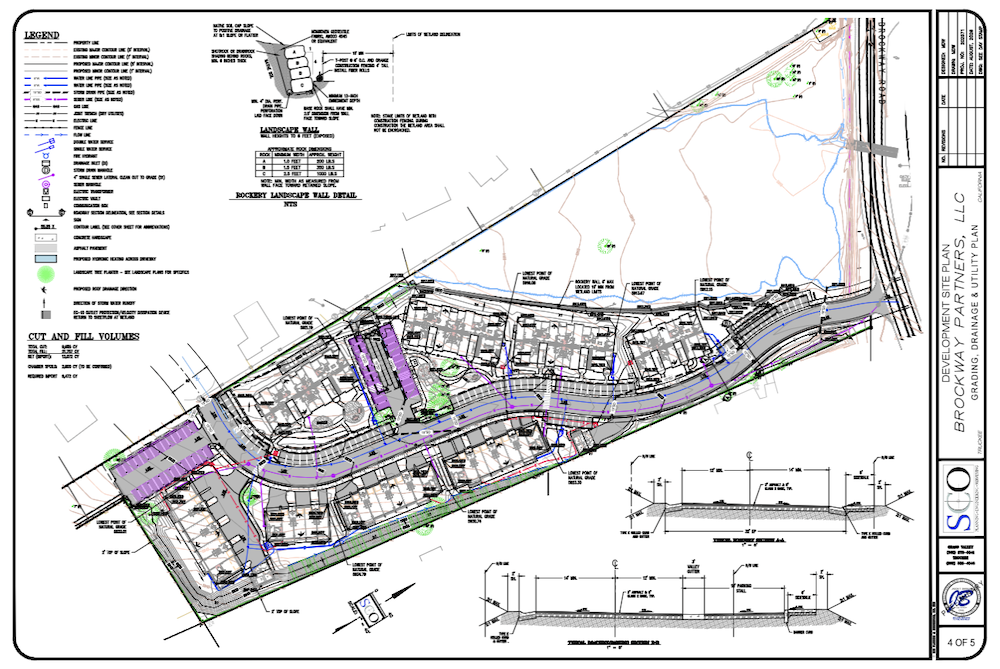
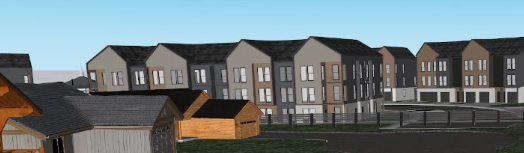
We support thoughtful, measured growth that protects the character and natural resources of our community. The proposed Brockway Collective—115 apartment and condominium units in eight three-story buildings on two parcels that include sensitive wetlands—raising important concerns about the scale and location of that development.
A survey was conducted of the 543 homeowners within the Tahoe Sierra Meadows Homeowners Association. 94% of all homeowners are opposed to the project in its current form.
The top three reasons for opposing the project are environmental impact, evacuation safety, and circulation on surface streets. We are not opposed to housing development. We support responsible development that meets the Town’s Municipal Code, state law, as well as environmental and public safety protections.
We welcome the opportunity to work with the Town and the applicant on a plan that protects both the surrounding community and the environment, and we encourage the applicant to engage nearby neighborhoods early and meaningfully.
Environmental Impact and Site Sensitivity
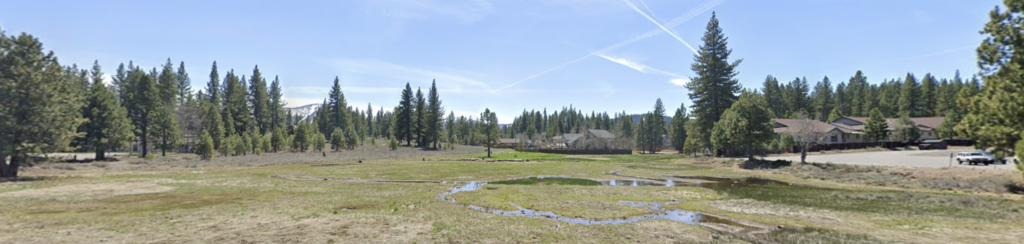
A sensitive and irreplaceable wetland habitat. The planned location is not a routine flat infill. It is a never-before-developed meadow, of which one third is a rare seasonal wetland. Both the wetland’s footprint and its hydrology are active and ecologically sensitive.
“Wetlands are not vacant lots waiting to be monetized. They serve an essential purpose by filtering water, supporting local wildlife, reducing flooding, and preserving the natural character that makes this area special. Once they are destroyed, they are gone forever.”
Less than ten years ago, Town and 14 cross-agency partners and funders spent several millions dollars of taxpayer and donor money to restore fragmented meadows modified by development nearby on Brockway Rd. The proposed project site is a documented narrow wildlife corridor providing sustenance and peace to migratory species and perennial dwellers, including birds, coyotes, bats, deer, bobcats, rabbits, raptors, sandhill cranes, and bears. This project would disrupt this critical habitat, and is regressive to the public investment in wetland restoration.
Noise and light pollution. The noise and light from this apartment complex and parking areas would negatively impact the lives of those living nearby as well as the wildlife. 115 units with fire pits, a playground, parking lots, tall buildings, and concentrated public gathering space in a tight site would cause hundreds of people to congregate. That is neither an ideal use of land directly adjacent to one of Truckee’s quiet residential areas, nor is it appropriate to have noise and artificial lighting next to a wetland habitat and corridor where many animals rely on dark and quiet nighttime surroundings.
This location regularly floods and will again. There is a history of proposals that have considered the effects of building on this seasonally wet parcel, and a matching history of documented public health and safety hazards related to groundwater. Projects of the past were determined to not be suitable. The same concerns still stand. It is a drainage site for all of the storm water in the eastern part of Sierra Meadows and Placer County just gently uphill, both due to gravity and with assistance from Town-designed over- and under-ground storm drains.
“Regardless of winter snowpack, the meadow is a swamp for multiple months throughout spring and into summer. And even in summer, during downpours, most of the neighbors use sump pumps to alleviate flooding just from short summer storms.”
This project would disrupt the current drainage patterns, causing damage to public property and public rights of way near it. For these and other reasons, a full EIR is needed.
Emergency and Evacuation Safety
Traffic already can’t be dispersed. Traffic is already a major problem on Brockway Rd. Many residents of Sierra Meadows report significant gridlock during busy winter and summer months which slows travel to work, to school drop-offs and pick-ups, and to medical appointments. It can often take three streetlight cycles to cross or turn onto 267 on busy days, and it is similarly difficult to merge into the roundabout by the Rock complex. With more than 400 other proposed units either approved or planned in the Brockway corridor (Estates Meadows, Silver Creek, Joeger Ranch Parcel 2 and 4, Soaring Ranch Phase 2 and 3),
“Adding another 115 units in this project to the same congested intersection will negatively affect the safety of current and future residents, and the impact must be evaluated cumulatively.”
Already-congested evacuation routes will become deadly. The evacuation path for Truckee’s south neighborhoods is to go East on Brockway Rd to 267. Adding hundreds of extra vehicles just from this project merging onto the same already-constrained route would endanger the safety of current residents of our neighborhood, making a timely emergency egress near-impossible. Even scarier, the evacuation route merges with the estimated thousands of vehicles coming from the Tahoe Basin over 267, which evacuation simulation data confirms could take 13 hours to clear even without the additional builds. Traffic impact needs to be studied before evacuation routes are made even worse.
The existing infrastructure does not support quick massive growth. Building high-density housing without specific plans to upgrade the infrastructure is a safety matter. There are no current plans to increase the road capacity, nor augment firefighting resources on this side of town, nor provide safe pedestrian paths. The current proposed primary egress onto Brockway Rd will create unsafe daily driving conditions as cars will be turning both left and right out of the project driveway, which is just steps away from an existing left and right egress from Hope Court, and neither of the two are geometrically aligned with the proposed roundabout at Martis Rd. Without a specific traffic impact analysis for effects on Brockway Rd, its egresses, and Hwy 267, the new and old neighbors are being put in an unsafe daily road hazard situation.
Circulation on Surface Streets and Parking
The streets are already too narrow. Due to heavy-at-times traffic on Brockway Rd, alternate routes in Waze/Google Maps already make traffic spill over and back up on Jeffrey Pine Rd and Martis Valley Rd, making Sierra Meadows a surface street gridlock. With an open secondary egress likely mandated by Truckee Fire, quiet local residential streets like Shore Pine Rd could become additional unintended thoroughfares for Northstar traffic. This consequence will drastically increase the volume of daily cars in quiet areas along three blind corner intersections toward Martis Valley Rd – where no sidewalks exist, and where winter streets are often plowed later. This will endanger local children walking to the school bus, elderly pedestrians, strollers, leashed pets, and residents backing out of driveways. We ask the applicant to proactively work with the Fire Department to keep this emergency egress closed aside for emergencies only, as other street ends currently do at Star Pine Rd,Palisades Dr and Columbine Rd.
The burden of minimal parking will shift to the neighbors. The parking ratio leaves no margin for multi-car households, overnight guests, or service vehicles. Based on experience around town, it is reasonable to expect that this will result in overflow parking onto adjacent streets and neighboring properties.
“In Henness Flats, the parking overflows to Henness Rd 100% of the time; in Sierra Village apartments at the exit of Sierra Meadows, the parking overflows to Jeffery Pine Rd and Martis Valley Rd 100% of the time.”
Overflow from the proposed project will create additional congestion and safety blockage along the Brockway Rd corridor. Additional parked vehicles will also make streets narrower and disrupt safety and services on surface streets like Shore Pine Rd and Columbine Rd due to inability of trash collection, fire engines, plows, and other service vehicles to pass through or turn around. We urge the applicant to proactively identify specific on-site solutions to increase parking supply that do not affect the adjacent streets.
Pedestrian infrastructure must be improved. The throughput of the hundreds of additional cars onto Brockway Rd further endangers a critical bike and pedestrian corridor that many neighborhood residents and kids utilize, as well as Truckee residents and visitors at large. The lack of a dedicated bike path between the Sierra Meadows roundabout and Hope Ct necessitates pedestrians and bikes to be on the road shoulder alongside traffic speeding to make the light.
“I have made multiple contacts with the Town of Truckee regarding the lack of a bike trail or sidewalk in this area. It’s really dangerous.“
This road shoulder is the frontage of the proposed project, and we urge the applicant to proactively propose infrastructure improvement of this frontage that benefits the community, in the form of a separated paved and plowed bike path to mitigate the safety hazards introduced by the additional exit onto Brockway Rd as well as the potential overflow parking on Brockway Rd shoulder. This is especially when the project boasts walkability to the transit stop at The Rock.
Housing and Livability
Even with Truckee’s 50% vacancy rate, housing for local workers continues to be a shortage. Sierra Meadows is one of the most desired neighborhoods for those who live and work in Truckee full-time. Many of our residents are teachers, nurses, firefighters, truck drivers, plumbers, electricians, and service industry workers. This project falls short of offering workforce housing or creative solutions to close the gap and will negatively impact existing workforce housing.
It’s not really housing for the workforce. The applicant offers 17 low-income units for under 80% AMI. None of the units have a local employment requirement. There is no enforceable way to guarantee that renters are workers from the local area. This project does not close the local workforce housing gap: in other words, this project offers 98 market-rate units, without restrictions or enforceability on STR, or using the units as second homes or ski leases, which would only exacerbate the unaffordability challenge. Even at Coburn Crossing, where there is a local employment requirement to rent, previous year audits have shown non-compliance (Oct 15, 2021 Moonshine Ink article).
“Nothing in this proposal makes me believe like they’re building something FOR the people who work here. I can see a development like this adding to our problems, not helping.“
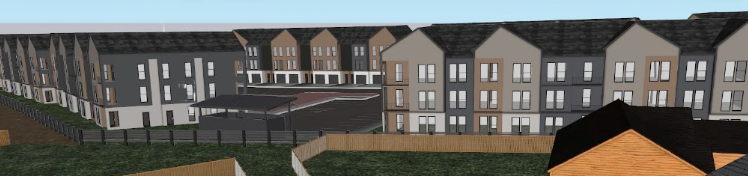
Loss of privacy. The proposed placement of eight closely clustered, three-story apartment buildings immediately adjacent to a low-density, single-family neighborhood will substantially reduce the privacy currently enjoyed by neighboring homes. Upper-story windows and balconies are likely to overlook existing backyards and, in some cases, directly face nearby living spaces and bedrooms. This level of overlooking is inconsistent with the transition typically expected between higher density and established single-family neighborhoods and should be addressed through project design, setbacks, building placement, screening, or other mitigation measures.
“Where else in Truckee are 3-story multi-family structures built directly adjacent to single family homes?”
While the applicant seeks waivers of setbacks and heights, we urge the Town to require and enforce Objective Design Standards on building transitions, privacy, and architectural massing.
Conclusion
Sierra Meadows has long been one of Truckee’s favorite family neighborhoods. People choose to live here because it’s a safe, quiet place where neighbors know each other, kids can grow up outdoors, and we still get to enjoy the open meadows, wildlife, and natural beauty that make Truckee special.
As our town continues to grow, we ask that growth be allowed in ways that don’t destroy what makes our town special. Let’s protect the last remaining meadows and open spaces between our neighborhoods, reduce the very real wildfire evacuation risks, safeguard our creeks and water quality, and preserve the quality of life that brought so many of us here in the first place.